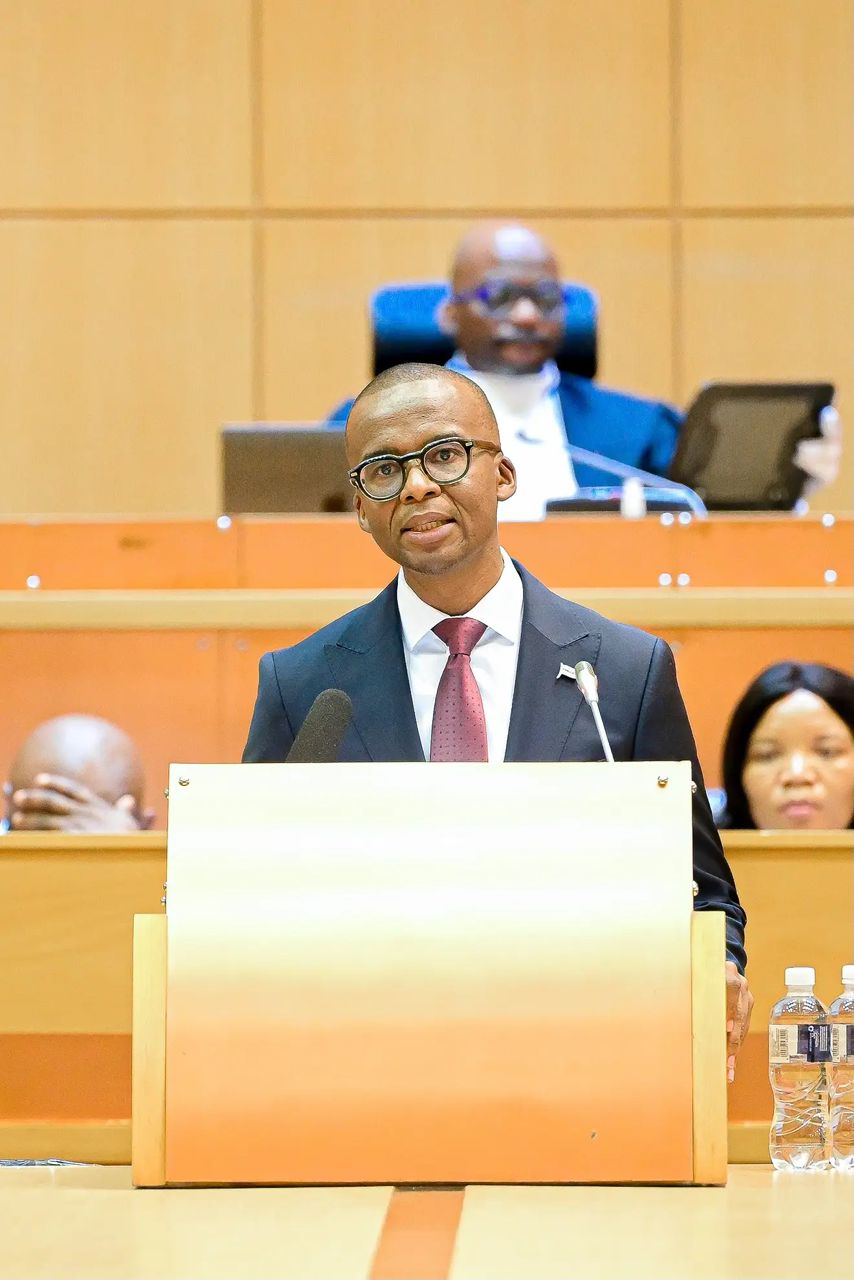

Ephraim Nkape
In politics, the horizon is always moving. For the Umbrella for Democratic Change (UDC), the eyes of the strategist must already be cast toward 2029. The question is no longer about how power was attained but how it will be sustained.
The difference between a government that merely holds office and one that transforms a nation lies in a single, powerful concept: proactive governance.
To understand the stakes, we need only look to the seminal insights of Daron Acemoglu and James A. Robinson in Why Nations Fail. Their work offers a blueprint that is as terrifying as it is hopeful. They argue that the destiny of a nation is not written in its geography or its culture, but in its institutions. Nations that build “inclusive institutions” systems that share power and enforce the rule of law equally thrive. Those that allow “extractive institutions” to concentrate power in the hands of a few eventually falter.
For the UDC, the path to 2029 and beyond relies on avoiding the trap of the “permanent emergency.”
There is a pervasive narrative that often seduces governments in power. It suggests that when the economy is tight, or unemployment is high, or the cost of living is biting, we cannot “afford” the luxury of institutional reform. It whispers that we must put out the fires of today before we can think about the architecture of tomorrow.
This is a false choice. In fact, it is the exact recipe for the failure Acemoglu and Robinson warn against.
A true proactive government understands that you do not wait for the storm to pass before you fix the roof. The economic struggles of the people are often symptoms of deeper institutional weaknesses, uncertainty in the law, lack of checks and balances, or policies that shift with the political wind. To fix the economy permanently, you must fix the institutions that underpin it.
This brings us to the most critical, proactive step the UDC government can take right now: the immediate establishment of a dedicated Constitutional Court to shepherd a full constitutional review.
This is not an abstract legal exercise. It is the bedrock of longevity.
By setting up a Constitutional Court now, well ahead of the next election cycle, the government would be planting a flag for the rule of law. It would be sending a signal to investors, to the region, and to the voter of 2029 that this administration is not afraid of scrutiny. It is a declaration that they are building a system strong enough to govern even them.
A constitutional review is a messy, complex process. Without a dedicated court to manage the interpretation of these changes, the process risks becoming bogged down in political squabbling. A Constitutional Court serves as the “inclusive institution” par excellence, a referee that ensures the game is played fairly for everyone, not just the side currently in possession of the ball.
If the narrative wins that we are “too busy” with immediate crises to build these institutions, we risk drifting into the kind of reactive governance that solves nothing. We become a nation that patches holes rather than building foundations.
The UDC has a unique opportunity to be the architects of a modern Botswana. By prioritising a Constitutional Court, they are doing something rare in politics: they are planting trees under whose shade they may never sit, for the benefit of citizens who are not yet born.
The road to 2029 will not be paved with quick fixes. It will be paved by the strength of the institutions established today. If the UDC wants to secure its legacy and the country’s future, it must be brave enough to build the court, review the constitution, and prove that strong institutions are not a distraction from the people’s needs; they are the only way to truly serve them.
*Ephraim Nkape is an operational excellence practitioner with a background in industrial engineering and quality management systems. Ephraim is passionate about governance, business process improvement and business systems optimisation with a growing focus on Six Sigma and lean methodologies