
Boemo Phirinyane
What if democracy did not begin at the ballot box, but in conversation?
For many, democracy is reduced to a singular civic ritual, voting. It is imagined as something that happens periodically, orderly, procedural, and contained within the walls of polling stations. Yet this narrow understanding misses something essential. Democracy, at its core, is not an event. It is a process, one that lives and breathes in the everyday exchanges between citizens, in their disagreements, their demands, and their insistence on being heard.
This is the idea at the heart of the work of Jürgen Habermas, one of the most influential political thinkers of the modern era. Habermas believed that democracy is sustained not merely through institutions, but through what he called the public sphere, spaces where ordinary citizens come together to debate, hold authority to account, and form public opinion. For him, elections are not the beginning of democracy, they are its outcome. What precedes them, and gives them meaning, is dialogue.
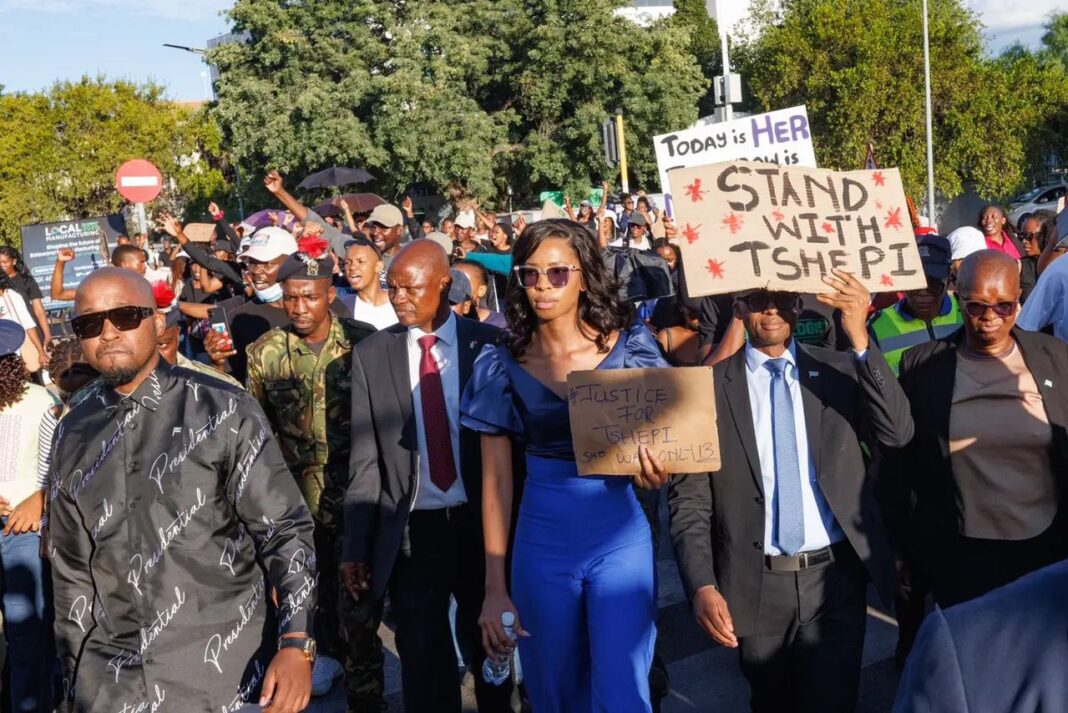
To understand democracy this way is to fundamentally shift how we interpret moments of public unrest. It requires us to see not just disruption, but dialogue.The recent protests directed at the UDC government have sparked concern, criticism, and most importantly debate. Three protests in the space of a month have been framed by some as signs of instability or dissatisfaction with governance. But through a Habermasian lens, they can be understood differently, not as a breakdown of democracy, but as evidence of its continued existence.
These protests are not occurring in a vacuum. They are rooted in deeply felt frustrations, the persistence of gender-based violence, the structural challenge of youth unemployment and underemployment. For many citizens, particularly young people, these are not abstract policy issues, they are lived realities. And when formal channels of engagement appear slow and inaccessible, the arena of public discourse shifts.
The streets, in this sense, become an extension of the public sphere. Protest, often dismissed as disorderly or confrontational, is in fact a form of communication. One of the most visible and urgent forms available to citizens. It is what happens when conversation is no longer confined to boardrooms, parliamentary debates, or media commentary, but spills into public space. It is collective speech, amplified.
When institutions fall silent, the streets begin to speak. This is not a failure of democracy, it is a response to its limitations. Habermas reminds us that legitimacy in a democracy is not derived solely from electoral victory, but from ongoing public reasoning. Governments do not simply earn authority at the ballot box, they must continually justify it through responsiveness and engagement. Where this engagement falters, protest emerges not as an anomaly, but as a corrective mechanism.
Moreover, protest performs a critical function, it creates visibility. Issues such as gender-based violence often persist not because they are unknown, but because they are insufficiently prioritized. They exist in policy documents, in statistics, in quiet conversations, but not always in the center of national attention. Protest disrupts this imbalance. It forces society, and the state, to confront what has been ignored.
It transforms private grievances into public urgency. Equally important is the way protest compels response. Unlike passive forms of expression, it demands acknowledgment. It shifts governance from a position of comfort to one of accountability. In doing so, it revitalizes a core democratic principle, that power must remain answerable to the people.
What is particularly striking about the current wave of protests we are witnessing, is the role of the younger generation. Largely driven by Gen Z, these demonstrations reflect a shift in political consciousness. This is a generation less persuaded by rhetoric and more motivated by results. They are digitally connected, socially aware, and increasingly unwilling to accept symbolic gestures in place of tangible change.
For them, democracy is not a distant ideal, it is something that must deliver, here and now. This generational shift is significant. It challenges traditional modes of political engagement that rely heavily on patience, deference, and periodic participation. Instead, it introduces a more continuous, assertive form of citizenship, one that aligns closely with Habermas vision of an active and communicative public.
Of course, protests are not without controversy. Critics argue that they disrupt order, strain public resources, and risk escalating tensions. These concerns are not without merit. But they must be weighed against a deeper question, what is the alternative? A democracy without visible dissent is not necessarily a healthy one. It may simply be a quiet one, quiet not because citizens are content, but because they feel unheard. Democracy is not defined by the absence of conflict, but by how that conflict is expressed and managed. Protest, in this context, is not the problem, silence is. The challenge, then, is not to suppress these expressions of public dissatisfaction, but to engage them. To recognize protest as a legitimate form of participation is not to endorse every demand or tactic, but to affirm the principle that citizens have a right to be heard, not just during elections, but in the ongoing life of the nation.
For Botswana, this moment presents a choice. We can interpret these protests as threats to stability, responding with defensiveness or dismissal. Or we can see them for what they are, signals. Signals that parts of the population feel they exist in the margins of society, that their lives are of little material value. Signals that certain issues like gender based violence require urgent and collective attention, that the democratic conversation is evolving. To engage with these signals is to strengthen democracy. To ignore them is to risk eroding it.
Habermas insight remains as relevant as ever, democracy does not begin at the ballot box. It begins in conversation, in the messy, sometimes uncomfortable exchange of ideas between citizens and those who govern them. It lives in the willingness to listen, to respond, and to adapt.