
Staff Writer
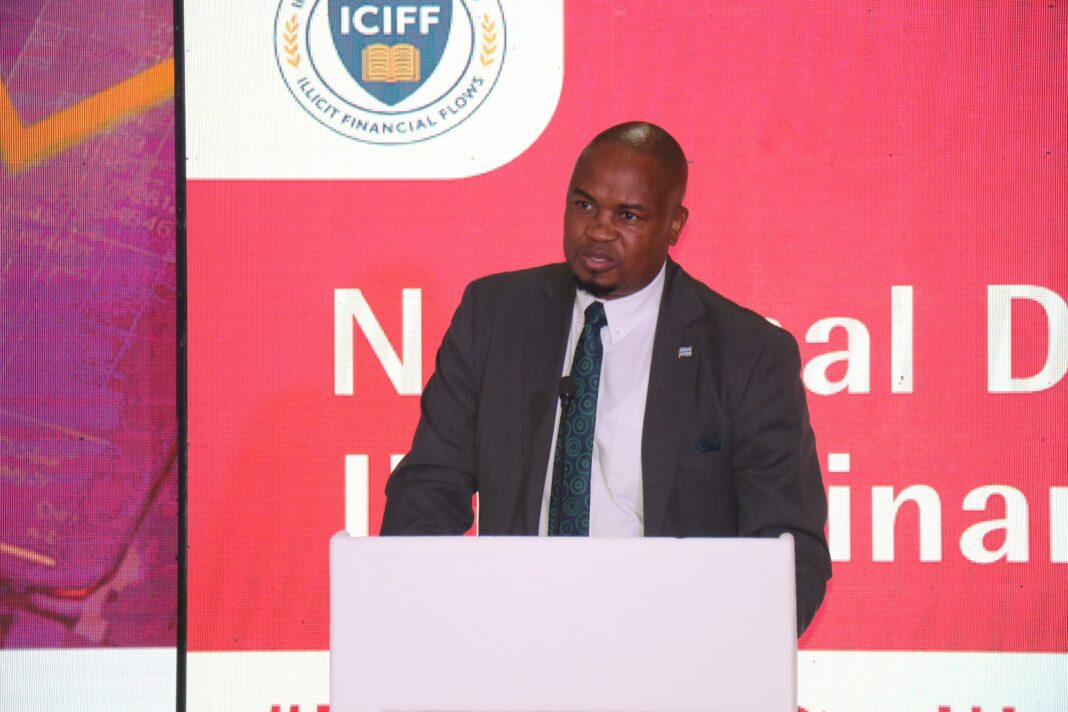
The University of Botswana (UB) through its affiliated Institute for Combating Financial Flows(ICIFF) has reaffirmed its commitment to supporting national and continental efforts to combat illicit financial flows (IFFs), with the Acting Vice Chancellor Dawid Katzke calling for stronger collaboration among stakeholders to address the growing threat posed by financial crimes.
Speaking at the inaugural National Dialogue on Illicit Financial Flows held in Gaborone, the Acting Vice Chancellor Katzke described the event as a landmark platform that brings together key stakeholders to collectively address the challenge of illicit financial flows and their impact on economic development, governance, and social progress.
“Illicit financial flows continue to undermine economic development, weaken public institutions, erode domestic resource mobilisation, and threaten the achievement of sustainable development goals across Africa and beyond,” said Katzke. Katzke stressed that resources that should be directed towards education, healthcare, infrastructure, innovation, and social development are often lost through corruption, tax evasion, money laundering, illicit trade, and other financial crimes.
He noted that for Botswana, addressing illicit financial flows is more than a regulatory obligation; it is a strategic national priority. He emphasised that safeguarding the country’s resources requires continuous strengthening of institutions, systems, and partnerships to ensure that national wealth benefits present and future generations.
The Acting Vice Chancellor highlighted the pivotal role of the Institute for Combating Illicit Financial Flows in advancing research, knowledge generation, professional capacity development, and stakeholder collaboration. He explained that the institute serves as a bridge between academic expertise and practical experience, enabling the development of evidence-based solutions to increasingly sophisticated financial crimes.
He further underscored the importance of the dialogue’s diverse programme, which features discussions on beneficial ownership transparency, corruption prevention, financial intelligence, and whistleblowing mechanisms. According to him, these discussions are essential in strengthening Botswana’s collective response to illicit financial activities.
Encouraging active participation from attendees, the Acting Vice Chancellor urged stakeholders to use the dialogue as an opportunity to share knowledge, build networks, strengthen partnerships, and identify practical interventions that can enhance the country’s ability to detect, prevent, and deter illicit financial flows.
He also reiterated the crucial role universities play in addressing complex societal challenges. Universities, he said, are uniquely positioned to convene dialogue, produce knowledge, and drive innovation through research, teaching, policy engagement, and strategic partnerships. Through these efforts, the University of Botswana remains committed to contributing to Botswana’s development agenda and supporting the fight against financial crime.
Further, he expressed gratitude to the organisers, speakers, sponsors, and stakeholders whose efforts made the national dialogue possible, noting that their commitment to promoting transparency, integrity, and accountability was invaluable.
Concluding his remarks, he stressed that combating illicit financial flows requires a whole-of-society approach founded on trust, collaboration, information sharing, and collective action. To this end, he expressed confidence that the dialogue would generate valuable insights and practical recommendations to strengthen Botswana’s response to financial crime and enhance efforts to promote good governance and sustainable development.
The National Dialogue on Illicit Financial Flows is geared towards facilitating robust discussions among local and international experts, contributing to stronger policy frameworks and coordinated action against financial crimes that threaten economic growth and development.