
The Ministry of Health has reaffirmed its commitment to introducing a National Health Insurance (NHI) reform, describing it as one of Botswana’s most ambitious healthcare transformations aimed at ensuring every citizen has access to quality healthcare without suffering financial hardship.
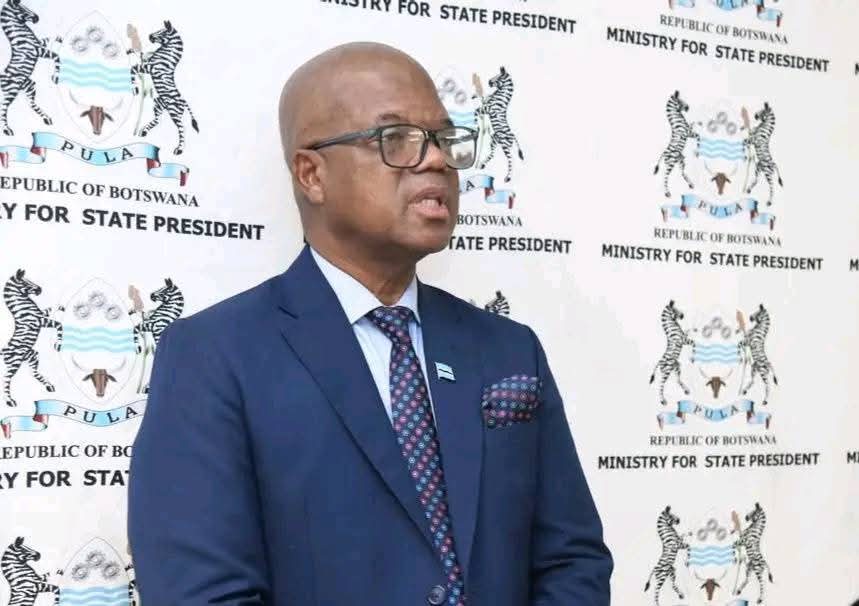
Addressing members of the media during a press briefing held at the Sir Ketumile Masire Teaching Hospital Auditorium on Wednesday, Acting Permanent Secretary in the Ministry of Health, Dr Tshepo Machacha, said the proposed reform goes beyond creating a health insurance scheme and seeks to fundamentally transform Botswana’s entire healthcare system.
Dr Machacha explained that the reform is designed to help Botswana attain Universal Health Coverage by ensuring that all citizens can access quality health services whenever they need them without facing financial barriers.
“The National Health Insurance Reform is not merely about establishing another health insurance scheme. Rather, it is a comprehensive health system reform designed to help Botswana achieve Universal Health Coverage,” he said.
He described the initiative as a flagship national reform that will modernise the country’s healthcare financing, organisation and service delivery systems while promoting equity, sustainability, efficiency and responsiveness to the changing health needs of the population.
While acknowledging Botswana’s achievements in improving life expectancy and controlling diseases over the years, Dr Machacha noted that the country’s health system is increasingly under pressure from growing challenges.
Among these are inequalities in access to healthcare services across different parts of the country, rising healthcare costs, the increasing burden of non-communicable diseases, technological advancements, demographic changes and growing public expectations. He also pointed out that despite government being the principal financier of healthcare, many households continue to incur significant out-of-pocket medical expenses, exposing families to financial hardship.
He further observed that the country faces broader fiscal constraints, making it imperative for the government to maximise the value of every pula invested in healthcare.
He added that the sustainability of Botswana’s health system will depend on reforms that integrate financing, governance, service delivery, human resources, medicines and technology into a cohesive and efficient system.
The Acting PS stressed that the media has a critical role in helping the public understand the proposed reforms accurately. He said the briefing was organised to equip journalists with a better understanding of the objectives, principles and proposed design of the National Health Insurance Reform to enable informed reporting.
Further, he encouraged journalists to actively participate in the engagement by asking difficult questions, challenging assumptions, and sharing concerns raised by citizens, saying constructive scrutiny would strengthen the reform process.
He said the Ministry expects the media to leave the engagement with a stronger appreciation of the rationale, opportunities and implementation considerations surrounding the reform while also providing valuable feedback before the policy and legislative proposals are submitted to Parliament.
He concluded by reaffirming the Ministry of Health’s commitment to transparency, openness and continued consultation with the media, stakeholders and the public throughout the reform process.