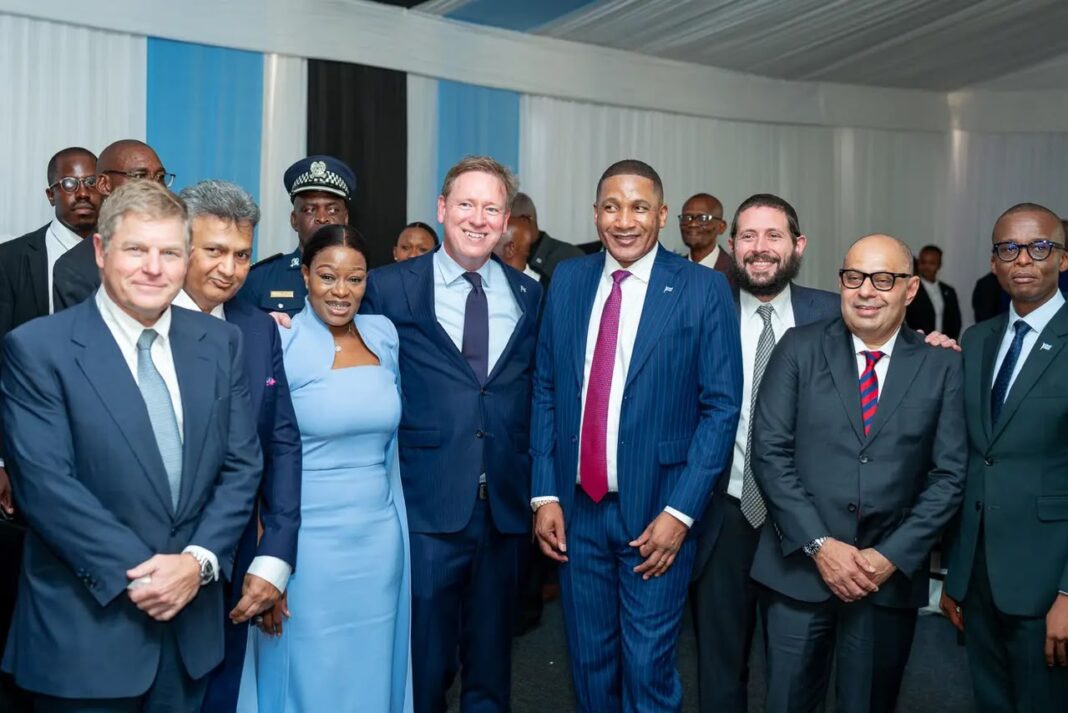

Delivering his State of the Nation Address under the theme of pursuing a steady path toward economic renewal, President Duma Gideon Boko laid out a comprehensive re-engineering of Botswana’s economic foundations. The President began by reminding Parliament of the solemn protocol of democratic accountability, framing the address around three pillars: a sober analysis of the nation as it is, an affirmation of where it ought to be, and a lucid strategy to bridge that divide. He defined Botswana’s True North as becoming a digitally enabled, export-led, and diversified high-income economy where every citizen is employed, empowered, and fulfilled. While paying tribute to departed citizens—including former President Festus Gontebanye Mogae—he candidly acknowledged the profound anxieties of the concerned citizen facing high fuel prices, youth unemployment, clinic shortages, and worn-out public infrastructure. Botswana, he stressed, has absorbed a harsh economic battering as a net importer and a diamond-dependent nation amid global geopolitical conflicts and trade tensions, yet it remains firmly standing.
The centerpiece of the economic agenda was a transformative announcement regarding the country’s mining crown jewel. Confronting a prolonged downturn in natural stones and the competitive rise of lab-grown alternatives—which he noted had blurred De Beers’ historic narrative—the President disclosed that Botswana will double its equity in De Beers from 15 percent to 30 percent. This transaction responds directly to Anglo American’s strategic decision to divest its 85 percent interest. Following extensive due diligence by an elite team of international and local financial, legal, technical, and tax advisers, the Government, through the Office of the President and the Minerals Development Company Botswana, designated the Global Diamond Consortium as its preferred bidder. Guided by strict principles of sustainable profitability, public financial prudence, and domestic beneficiation, this landmark acquisition will make Botswana the single largest shareholder in De Beers, cementing national influence over strategic diamond assets for generations.
Crucially, President Boko made clear that this transaction is not an isolated retreat into traditional extraction, but an aggressive leap into advanced technology. Through De Beers’ ownership of Element Six, a global pioneer in synthetic diamond synthesis, Botswana is positioning itself at the frontier of high-power computing, artificial intelligence data centers, and advanced semiconductor thermal management. Highlighting discussions with United States Commerce Secretary Howard Lutnick, President Boko confirmed that United States President Donald Trump announced a 600 million dollar joint facility in Georgia involving Element Six. Furthermore, Botswana is executing this transaction in direct alliance with its neighbors, the Republic of Angola and the Republic of Namibia, uniting the region’s premier diamond-producing states at the ownership table. These developments converge with the newly operational Diamonds for Development Fund, managed by an independent board under the enduring De Beers partnership, which has received its initial one billion Pula annual tranche out of a total ten billion Pula commitment.
These structural pivots occur against a backdrop of macroeconomic stabilization. The nation’s economic contraction narrowed from 2.8 percent in 2024 to 0.7 percent in 2025, buoyed by moderating declines in mining activity. Through disciplined interventions—such as a 700 million Pula temporary six-month suspension of the fuel levy, road levy, and security of supply levy—the state shielded household budgets while protecting financial buffers. By July 2026, foreign exchange reserves had rebounded by 32.2 percent to 63.2 billion Pula, providing 8.3 months of import cover compared to 6.3 months a year earlier. This prudent trajectory was validated by Moody’s, which upgraded Botswana’s credit outlook from negative to stable at Baa2. On the domestic banking front, financial inclusion expanded through a newly mandated Basic Bank Account for workers earning under 4,000 Pula monthly, requiring a modest 50 Pula opening balance, carrying zero monthly maintenance charges, and offering free cards and initial withdrawals. Business liquidity was similarly energized by extending the national payment clearing window to 5:00 PM, processing nearly 67 billion Pula in same-day payments, while the state cleared over 216,000 supplier invoices valued at more than 62 billion Pula.